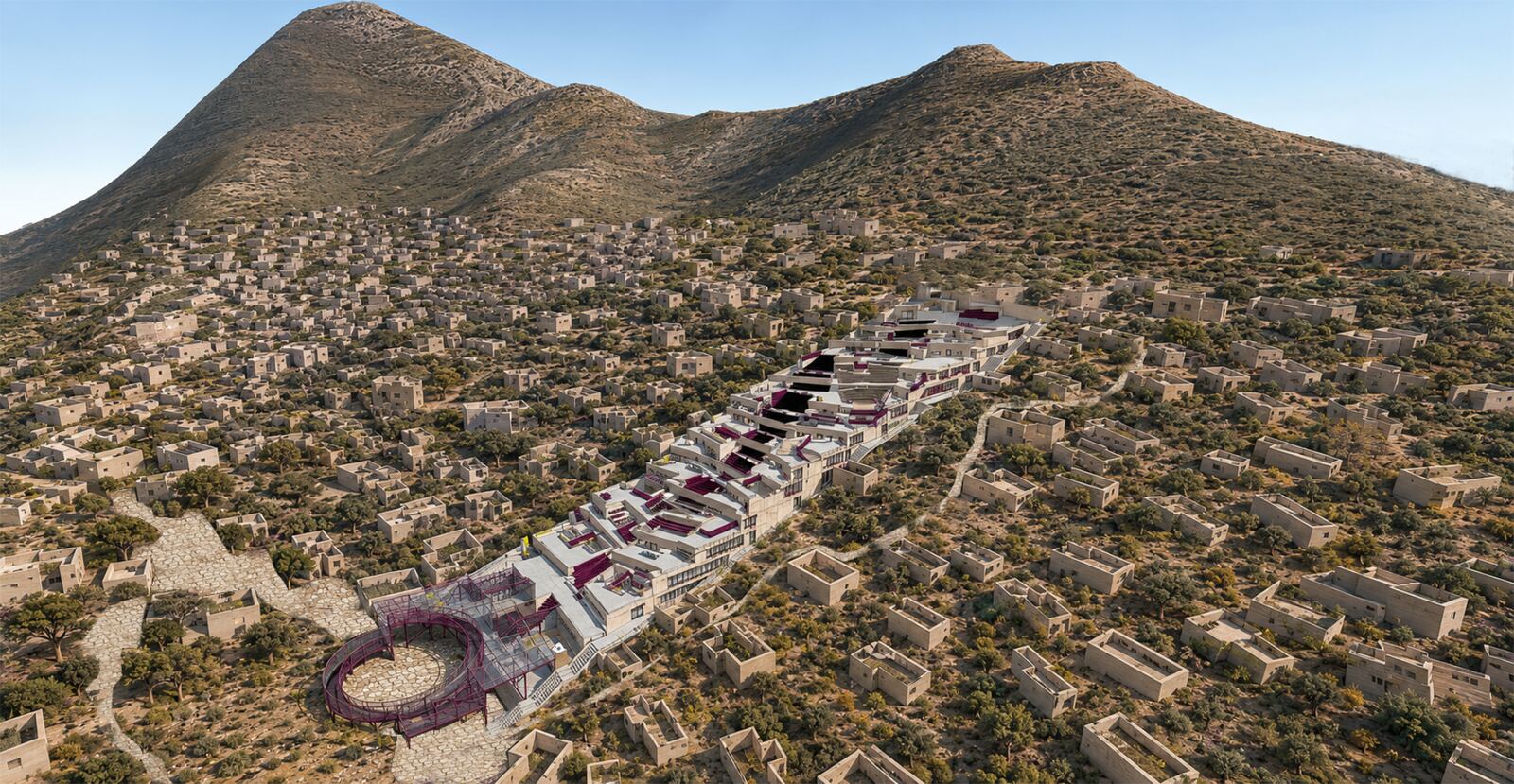
Terraced landscape — cultural spine
Kayaköy is a Greek Orthodox village abandoned after the 1923 population exchange — hundreds of stone houses left to erode into the hillside, now a heritage site caught between tourism, preservation law, and a fading local economy.
The site raises a hard question for any intervention: how do you build in a place whose entire value lies in its emptiness?
Rather than reconstructing what was lost, the project inserts a new architectural layer that runs alongside the ruins — a terraced cultural spine that reads the landscape's existing contours instead of overwriting them.
Each terrace holds a different program — archive, workshop, gathering hall — stitched together by a single circulation path that threads through both old stone and new construction.
The ruin is not a backdrop — it is the client.
Mapping ruin typologies, sightlines and existing terrace geometry across the site.
Identifying which ruins to preserve as-is, which to stabilize, and where new structure can sit.
Threading a single circulation route that connects new program across the terraced slope.
Detailing the junction between existing stone and new concrete — visible, not disguised.